

Choosing the right professional to straighten your teeth can shape the results you’ll live with for decades. While your family dentist may offer some alignment options, an orthodontist brings years of specialized training focused entirely on tooth movement, bite correction, and jaw alignment. Here’s what sets these two roles apart and how to decide who should guide your smile.
What Is the Difference Between an Orthodontist and a Dentist?
All orthodontists are dentists, but only a small percentage of dentists are orthodontists. To become an orthodontist, a dentist must complete an additional 2-3 years of specialty residency accredited by the Commission on Dental Accreditation (CODA), focused entirely on tooth movement, bite correction, and dentofacial orthopedics.
Your general dentist is your primary care provider for oral health. They handle cleanings, fillings, crowns, root canals, extractions, and gum care. An orthodontist, on the other hand, specializes in aligning teeth and jaws. That means diagnosing bite issues, planning tooth movement, and using appliances like modern metal braces and clear aligners to guide your smile into its ideal position.
Only graduates of CODA-accredited orthodontic residencies qualify for membership in the American Association of Orthodontists (AAO), the professional body representing specialists in the field.
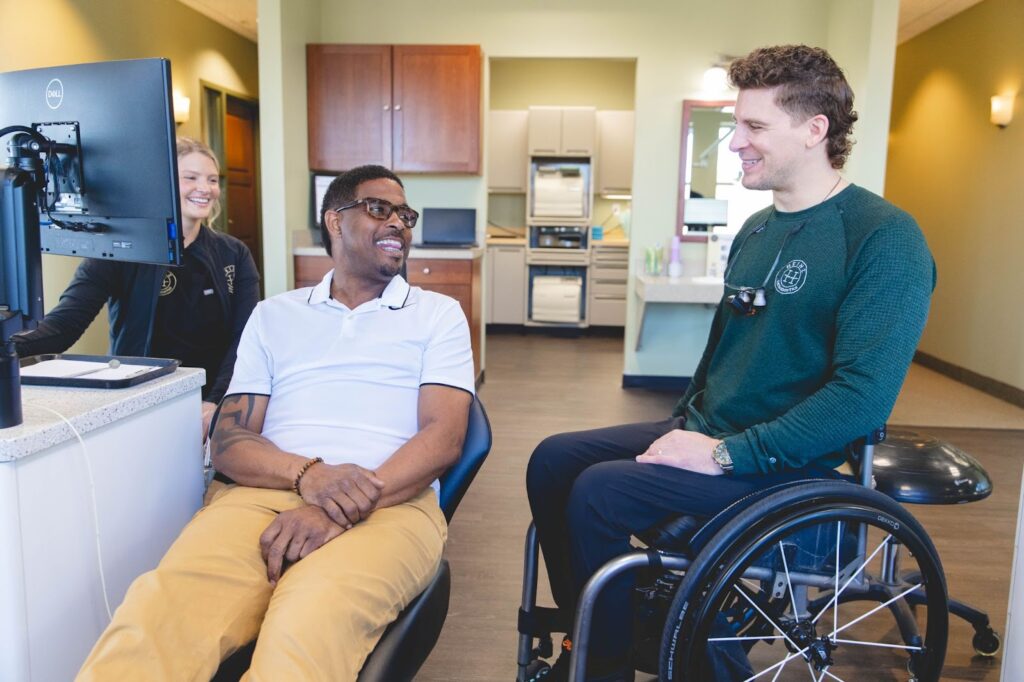
At Heinz Orthodontics + Aesthetics, Dr. Jeffrey Heinz focuses exclusively on orthodontic care and aesthetic enhancements. Every visit centers on the expertise needed to create a smile that lasts a lifetime, and every patient becomes part of the heinz family from the first hello.
How Each Professional Is Trained and What They Do
The training paths start together and then diverge. Understanding the difference helps you match the right expert to your needs.
Training Pathway
- Dentists: Complete 4 years of dental school and earn either a DDS (Doctor of Dental Surgery) or DMD (Doctor of Dental Medicine). They’re then licensed to practice general dentistry.
- Orthodontists: Complete the same 4 years of dental school, then continue with a 2-3 year CODA-accredited orthodontic residency. This residency typically involves thousands of additional hours focused specifically on tooth movement, growth and development, and biomechanics.
Scope of Practice
Your general dentist typically provides:
- Routine cleanings and exams
- Fillings and crowns
- Root canals and extractions
- Gum disease treatment
- Basic aesthetic services like whitening
An orthodontist’s scope is more focused:
- Modern metal braces
- Clear braces
- Clear aligners
- Bite correction (overbite, underbite, crossbite, openbite)
- Jaw alignment and dentofacial orthopedics
- Retention planning to protect long-term results
Some general dentists do offer clear aligners, but they haven’t completed the specialty residency required for handling complex tooth movement or difficult bite issues. For straightforward cases, that may work. For anything more involved, specialist training makes a real difference in what’s possible.
At Heinz Orthodontics, Dr. Heinz and the Heinz team use advanced tools like DentalMonitoring for remote check-ins between visits and Smile Arc Protection for precision treatment planning. These technologies help fine-tune your amazing results in ways general offices typically aren’t equipped for.
Benefits of Choosing an Orthodontist to Straighten Your Teeth
When your goal is a straighter, healthier smile, a specialist brings something a general office simply can’t match: years of daily practice devoted to moving teeth well. Here’s what you gain when you work with an orthodontist:
- Specialized expertise for complex cases. Overbites, underbites, crossbites, crowding, and jaw misalignment all require nuanced planning. Orthodontists spend years training specifically on these conditions.
- More predictable results. Specialists diagnose subtle issues that general practitioners may not catch. That means fewer complications, less retreatment, and a lower chance of relapse down the road.
- Advanced diagnostic technology. At Heinz Orthodontics, you’ll benefit from digital scans, 3D imaging, and DentalMonitoring, which lets Dr. Heinz check your progress remotely between visits.
- A fully custom smile journey. Your bite, growth pattern, and lifestyle all shape the plan. An orthodontist tailors every detail of your smile journey rather than fitting you into a one-size template.
- Access to the full range of appliances. You’re not limited to a single option. Modern metal braces, clear braces, Pitts21 self-ligating braces, and clear aligners are all on the table, and Dr. Heinz will recommend what fits your case best.
- Better long-term oral health. Properly aligned teeth are easier to clean, less prone to wear, and put less stress on your jaw joints. That translates to fewer issues with gum disease, cavities, and TMJ discomfort over time.
What does all of this add up to? A specialist’s training shows up in the details, from the first digital scan to the final retainer fitting. You’re not just paying for straighter teeth. You’re paying for a result that holds up, and joining a group of raving fans who’ve been through it themselves.
Orthodontist vs. Dentist: Side-by-Side Comparison
Here’s a quick reference that lays out the key differences at a glance.
| Category | Dentist | Orthodontist |
|---|---|---|
| Education | 4 years of dental school (DDS or DMD) | 4 years of dental school + 2-3 year CODA-accredited residency |
| Primary Focus | General oral health | Tooth and jaw alignment |
| Common Services | Cleanings, fillings, crowns, root canals, extractions | Braces, clear aligners, bite correction, retention |
| Technology | Standard dental imaging and tools | 3D imaging, digital scans, DentalMonitoring, treatment planning software |
| Ideal For | Routine oral health care | Complex bite and alignment issues |
| Professional Membership | American Dental Association (ADA) | American Association of Orthodontists (AAO) |
When to See a Dentist
- Routine cleanings and exams
- Cavities or tooth discomfort
- Gum disease or bleeding gums
- Chipped or damaged teeth
- Wisdom tooth concerns
When to See an Orthodontist
- Crooked or crowded teeth
- Gaps between teeth
- Overbite, underbite, or crossbite
- Jaw discomfort, clicking, or soreness
- Questions about modern metal braces or clear aligners
- Teeth that have shifted after previous treatment
You don’t need a referral from your dentist to book a free consult. If you’re wondering whether treatment is right for you, you can schedule directly.
Cost Factors: Does Specialist Care Cost More?
Specialist care is often more affordable than people expect. Orthodontic fees at a specialty practice are typically comparable to what a general dentist would charge for similar treatment, and the long-term value is often higher.
A few things worth knowing as you compare:
- Fees are often comparable. Specialists don’t automatically charge more. In many cases, prices are similar to what a general dentist offers for the same appliances.
- Specialist care reduces retreatment risk. When alignment is done right the first time, you avoid the extra cost of fixing complications later, including TMJ issues or relapse.
- Insurance benefits usually apply either way. Most orthodontic insurance plans cover treatment whether it’s provided by a dentist or an orthodontist.
- Flexible payment options make it easier. Heinz Orthodontics offers financing through OrthoFi, with flexible in-house payment plans and low or no down-payment options.
Not sure where to start? Heinz Orthodontics offers a free consult so you can review your options, get a clear cost breakdown, and compare with no obligation. You can also request a virtual consult from home if that’s easier.
Who Is a Good Candidate for Orthodontic Treatment?
Orthodontic care isn’t just for teens. If you have concerns about the alignment of your teeth or the way your bite functions, there’s likely a treatment option that fits your age and lifestyle.
- Children: The American Association of Orthodontists recommends a first orthodontic evaluation by age 7. Early intervention can guide jaw growth and reduce the need for more involved treatment later.
- Teens: This is the classic window for modern metal braces or clear aligners. As permanent teeth come in, Dr. Heinz can address alignment while the jaw is still developing.
- Adults: Adult patients are one of the fastest-growing groups in orthodontics. Clear braces and clear aligners offer discreet options that work well with a professional lifestyle.
Signs it’s time to schedule an evaluation:
- Crowding or crooked teeth
- Noticeable gaps
- Overbite, underbite, or crossbite
- Jaw clicking or soreness
- Difficulty chewing or biting
- Teeth that have shifted after previous orthodontic treatment
You don’t need a referral to see Dr. Heinz. You can book a free consult directly and get answers about your specific case, along with a clear picture of what your smile journey could look like.

Frequently Asked Questions
Is it better to get braces from a dentist or an orthodontist?
For most people, the right orthodontist is the better choice. Orthodontists complete 2-3 years of additional residency focused entirely on tooth movement and bite correction. That specialized training leads to more predictable results, especially for complex cases involving jaw alignment or significant crowding.
What type of dentist straightens teeth?
An orthodontist. Orthodontists are dentists who have completed a CODA-accredited specialty residency in orthodontics and dentofacial orthopedics. Only graduates of these programs qualify to join the American Association of Orthodontists.
What can an orthodontist do that a dentist can’t?
Orthodontists diagnose and treat complex malocclusions, plan multi-year tooth movement, and manage jaw growth in children through dentofacial orthopedics. They also have deeper training in retention planning, which helps protect your results long after treatment ends. A general dentist typically doesn’t have this depth of specialty education.
Can my dentist do clear aligners as well as an orthodontist?
Some general dentists do offer clear aligners, but there’s a meaningful difference. Orthodontists have specialty training in exactly how teeth move, how bites function, and how to plan complex cases from start to finish. For straightforward cases, a dentist may deliver decent results, but nothing like a properly trained orthodontist can.
Do I need a referral from my dentist to see an orthodontist?
No. You can book an orthodontic free consult directly without a referral. At Heinz Orthodontics, you’re welcome to schedule a free consult or virtual consult on your own.
Are orthodontists more expensive than dentists for braces?
Not necessarily. Fees are typically comparable between general dentists and orthodontic specialists for similar treatment. And because specialist care reduces the risk of retreatment or complications, you often save money over the long term. Most insurance plans cover orthodontic treatment either way.
Ready to Find Out What’s Right for Your Smile?
Whether you’re weighing options for your child, your teen, or yourself, Dr. Jeffrey Heinz and the Heinz team are here to help you make a confident choice. With locations in Rockford and Grand Rapids, Heinz Orthodontics + Aesthetics makes it easy to get world-class orthodontic care with a personal touch close to home.
Book your free consult today and see why so many families across Michigan trust their smiles to Heinz Orthodontics.